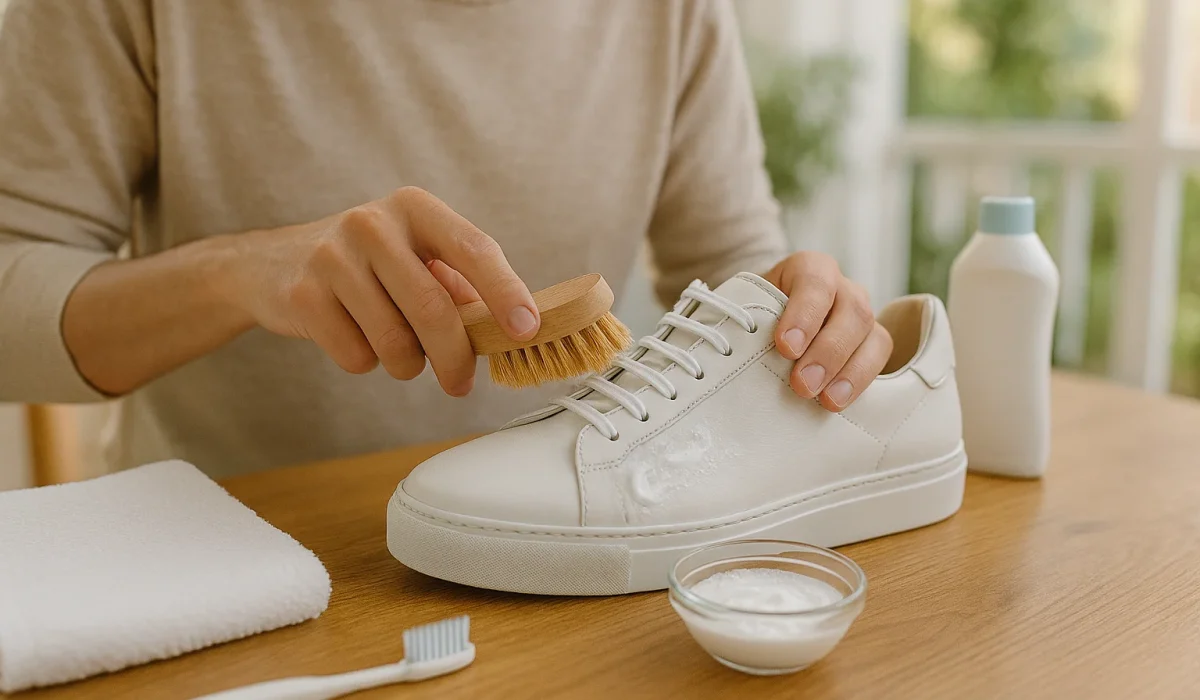
White shoes look fresh, versatile, and easy to pair with almost anything. The problem? They rarely stay white for long. Dirt, dust, grass stains, food spills, and everyday wear can quickly turn a clean pair of white sneakers into a dull, stained mess.
Fortunately, learning the best way to clean white shoes doesn’t require complicated equipment. The right cleaning method depends mainly on the shoe material. Canvas, leather, mesh, and synthetic shoes each need slightly different care.
This guide explains how to clean white shoes safely, what household items you can use, and what to look for when buying shoe-cleaning products.
What Is the Best Way to Clean White Shoes?
For most washable white sneakers, the simplest approach is to remove loose dirt first, clean the upper with a mild solution, scrub gently, and let the shoes air-dry.
Avoid soaking shoes unnecessarily. Too much water can affect adhesives, weaken certain materials, or cause unwanted marks as the shoes dry.
Before using any cleaning solution, check the manufacturer’s care instructions and test the product on a small, less visible area.
Step 1: Remove Laces and Loose Dirt
Start by taking the shoelaces out. This makes it easier to clean areas around the tongue and eyelets.
Shake the shoes gently or use a soft brush to remove loose dirt, dust, and dried mud. Don’t scrub aggressively at this stage because rubbing loose grit into the material can create additional marks.
If the soles are particularly dirty, clean them separately with a brush.
Step 2: Choose the Right Cleaning Solution
For many fabric and synthetic shoes, warm water mixed with a small amount of mild dish soap can work well.
You can also use a dedicated sneaker cleaner if you prefer a product specifically designed for footwear.
The important thing is to avoid assuming that one cleaner works for every shoe. A solution suitable for canvas may not be appropriate for suede or delicate leather.
For Canvas Shoes
Canvas is generally easier to clean than delicate materials. A mild soap solution and soft brush can help remove everyday dirt.
Work in small sections instead of soaking the entire shoe.
For Leather Shoes
Leather requires more care. Use a cleaner designed for leather and apply it gently with a soft cloth or appropriate brush.
Avoid excessive water because it can affect the leather’s finish.
For Mesh Shoes
Mesh can trap dirt between its fibers. Use a soft brush and a mild cleaning solution, working gently to avoid damaging the fabric.
For Synthetic Shoes
Many synthetic materials can be cleaned with mild soap and water, but always check the manufacturer’s instructions first.
Step 3: Scrub Gently
Dip a soft brush or clean toothbrush into your cleaning solution and gently work over the dirty areas.
Pay extra attention to the toe box, sides, heel, and areas around the laces. These places tend to collect the most dirt.
For stubborn stains, don’t immediately increase the strength of the cleaning solution. Instead, repeat gentle cleaning and allow the cleaner a little time to loosen the dirt.
Aggressive scrubbing can damage fabric and leave a visibly worn patch.
Step 4: Clean the Rubber Soles
The rubber sole is often one of the easiest parts of a white shoe to clean.
Use a damp brush or sponge with a small amount of mild soap. For scuff marks, a suitable cleaning sponge may help, but use it carefully because abrasive materials can dull some finishes.
Wipe away leftover soap with a clean, damp cloth.
Step 5: Clean the Shoelaces
Don’t forget the laces. Dirty laces can make freshly cleaned shoes look untidy.
For washable fabric laces, soak them in warm water with a small amount of mild detergent. Gently rub them, rinse thoroughly, and allow them to air-dry.
If the laces are heavily stained or damaged, replacing them can sometimes be easier than trying to restore their original color.
Step 6: Dry White Shoes Properly
Drying is just as important as cleaning.
After cleaning, use a dry towel to absorb excess moisture. Then leave the shoes in a well-ventilated area at room temperature.
Avoid placing wet shoes directly against a strong heat source. High heat can affect adhesives, materials, and the shape of some footwear.
Stuffing shoes loosely with clean paper can help them retain their shape while drying, although you should avoid using newspaper if ink could transfer onto the material.
What About Baking Soda and Other Home Remedies?
Baking soda is commonly recommended for cleaning white shoes, particularly when combined with water to make a mild paste. It can provide gentle abrasive action for some washable materials.
However, natural or household ingredients aren’t automatically safe for every shoe. Avoid experimenting with acidic or abrasive substances on suede, delicate leather, or specialty finishes.
When cleaning an expensive or delicate pair, a material-specific shoe cleaner is generally a safer choice.
Buying Tips: Choosing a White Shoe Cleaner
If you regularly wear white sneakers, investing in a dedicated shoe-cleaning kit can make maintenance easier.
Check Material Compatibility
The most important feature is whether the cleaner is suitable for your shoes. Look for products that specifically mention canvas, leather, mesh, synthetic materials, or other relevant surfaces.
Choose a Gentle Formula
A powerful cleaner isn’t necessarily better. A mild formula that can remove everyday dirt without damaging the shoe is often more useful for regular maintenance.
Look for a Suitable Brush
Some sneaker-cleaning kits include brushes with different bristle strengths. A softer brush is generally useful for uppers, while a firmer brush may be better for rubber soles.
Consider Convenience
If you travel frequently or clean shoes regularly, a compact kit with cleaner, brush, and cloth can be more convenient than buying everything separately.
Read the Instructions
Always follow the manufacturer’s instructions. Pay attention to recommended contact time, dilution requirements, and surfaces that should be avoided.
Common Mistakes to Avoid
One of the biggest mistakes is putting every pair of white shoes straight into the washing machine. While some shoes may be machine washable, others can be damaged by excessive water, heat, or agitation.
Another common mistake is using too much cleaning product. More soap doesn’t necessarily mean cleaner shoes and can leave behind residue.
Don’t scrub delicate materials aggressively, and don’t dry shoes with excessive heat.
Most importantly, don’t wait until your shoes are extremely dirty. Regular light cleaning is usually easier and safer than trying to remove months of built-up grime.
How to Keep White Shoes Cleaner for Longer
Prevention can save you a lot of cleaning time. Wipe off dirt as soon as you notice it, particularly after walking through mud or wet areas.
Store white shoes somewhere clean and dry. Avoid leaving them on damp floors or in direct sunlight for long periods.
If the manufacturer recommends a protective spray for your particular shoe material, using one may help reduce future staining.
Final Thoughts
The best way to clean white shoes is to match your cleaning method to the shoe material. Start by removing loose dirt, use a mild and appropriate cleaner, scrub gently, clean the soles and laces separately, and let the shoes air-dry naturally.
For regular sneaker care, a mild soap solution and a soft brush may be enough. If you own several pairs or frequently deal with stubborn stains, a dedicated shoe-cleaning kit can be a convenient investment.
With regular maintenance and the right cleaning approach, keeping your favorite white shoes looking fresh doesn’t have to be a difficult chore.