Bathroom mold is one of those problems that can start small and quickly become a frustrating household chore. A few dark spots around the shower, ceiling, grout, or silicone sealant may not seem serious at first, but mold can spread when moisture and poor ventilation are left unchecked.
The good news is that you usually do not need expensive equipment or professional cleaning products to deal with small areas of bathroom mold. The best way to remove mold from a bathroom depends on where it is growing, how extensive the problem is, and whether the surface can be safely cleaned.
Here is a practical guide to removing bathroom mold, choosing the right cleaning products, and preventing it from coming back.
Why Does Mold Grow in Bathrooms?
Bathrooms provide almost everything mold needs to grow: moisture, warmth, and surfaces where organic material can collect.
Long showers, condensation, leaking pipes, wet towels, and poor ventilation can all increase humidity. Mold commonly appears on shower walls, grout lines, ceilings, around windows, shower curtains, and silicone sealants.
If your bathroom stays damp for hours after a shower, cleaning the visible mold without addressing the moisture problem may only provide a temporary solution.
The Best Way to Remove Mold From Bathroom Surfaces
For small patches of mold, start with basic cleaning supplies and proper ventilation.
1. Improve Ventilation First
Before cleaning, open a window or switch on the bathroom exhaust fan. Good airflow helps reduce exposure to airborne mold particles and allows the surface to dry more quickly.
Wear household gloves, and consider wearing protective eyewear if you are dealing with a larger patch or using a strong commercial cleaner.
2. Choose a Suitable Mold Cleaner
A bathroom mold remover can be useful for mold on hard, washable surfaces. Look for a product specifically labeled for bathroom mold, mildew, tile, grout, or similar surfaces.
For light surface mold, a mild detergent and water may be enough. Some homeowners also use diluted household bleach on suitable non-porous surfaces, but it must be used according to the product label and should never be mixed with ammonia, acids, vinegar, or other cleaning chemicals.
Always check the cleaner’s instructions before applying it to painted surfaces, natural stone, colored grout, or other materials that could be damaged.
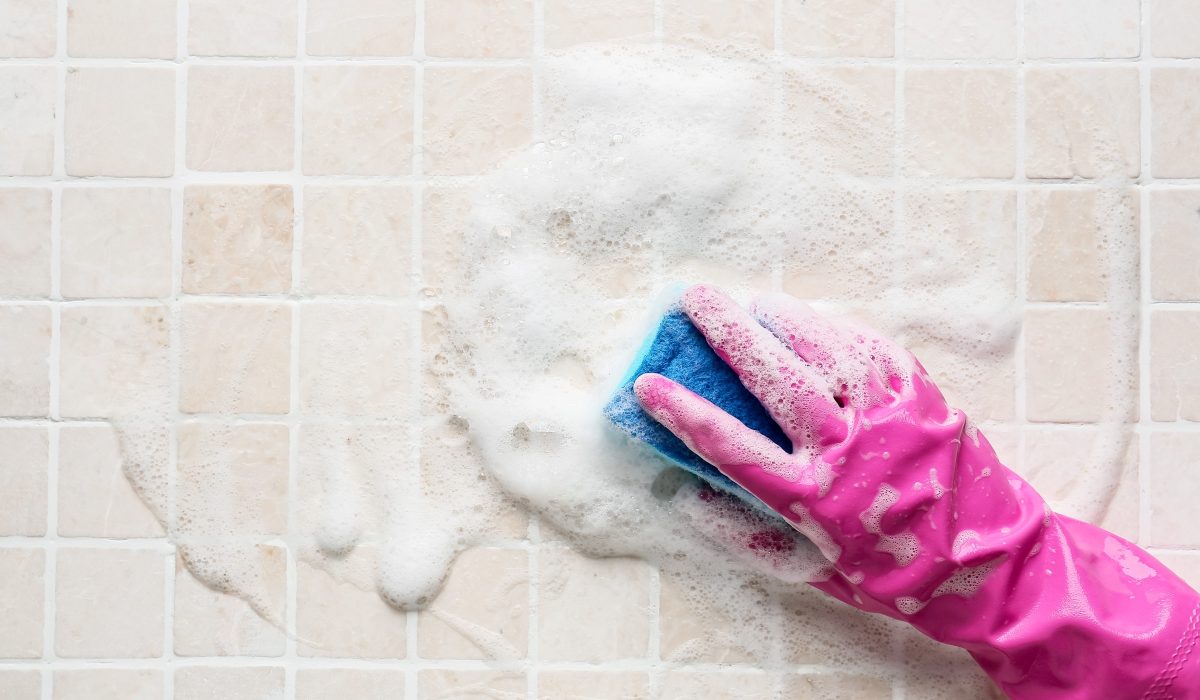
3. Scrub the Affected Area
Apply the cleaner as directed and give it the recommended contact time. Then scrub the affected area with a suitable brush or sponge.
Pay particular attention to grout lines, corners, and textured surfaces because mold can hide in small spaces.
After cleaning, rinse where appropriate and dry the surface thoroughly.
4. Replace Moldy Silicone When Necessary
Silicone sealant around a bathtub or shower can be particularly difficult to clean. If black discoloration has penetrated deeply into the silicone, surface cleaning may not completely solve the problem.
In these situations, removing the old sealant and applying new bathroom-grade mold-resistant silicone may be more effective than repeatedly treating the surface.
What Should You Buy to Remove Bathroom Mold?
You do not need a huge collection of cleaning products. A few practical items can handle most small bathroom mold problems.
Mold and Mildew Remover
A dedicated mold and mildew cleaner is convenient for shower walls, tiles, and other compatible hard surfaces. Compare products based on the surfaces they can safely treat rather than simply choosing the strongest formula.
Scrubbing Brush
A small stiff-bristled brush is useful for grout and corners. For delicate surfaces, choose a softer brush to reduce the risk of scratches.
Microfiber Cloths
Microfiber cloths are handy for wiping away residue and drying surfaces after cleaning. Keeping the bathroom dry is an important part of mold prevention.
Protective Gloves
Cleaning products can irritate your skin, so reusable household gloves are a simple and inexpensive addition to your cleaning kit.
Bathroom Exhaust Fan
If your bathroom regularly becomes steamy, improving ventilation may be more valuable in the long term than repeatedly buying mold remover. A properly functioning exhaust fan can help control humidity after showers.
Buying Tips: How to Choose a Bathroom Mold Remover
When shopping for a mold remover, do not focus only on claims such as “extra strength.” Consider how and where you plan to use it.
Check the surface compatibility. Some cleaners are designed for tiles and grout but may damage natural stone, painted walls, metal fixtures, or certain plastics.
Read the directions. Contact time, ventilation requirements, dilution instructions, and rinsing requirements can vary between products.
Consider the smell. Strong chemical odors can make bathroom cleaning unpleasant, particularly in a small room. If odor is important to you, look for a lower-odor alternative that is appropriate for the surface.
Think about the size of the problem. A small bottle may be sufficient for occasional spot cleaning, while larger areas may require a different approach.
Avoid mixing cleaners. Combining household cleaning chemicals can create dangerous fumes. Use one product at a time and follow its label instructions.
How to Prevent Bathroom Mold From Coming Back
Removing visible mold is only half the job. Controlling moisture is the key to preventing recurring bathroom mold.
Run the exhaust fan during showers and for some time afterward. If you have a window, opening it can also improve airflow when weather and privacy allow.
Wipe excess water from shower walls and doors after bathing. Hang wet towels where they can dry properly instead of leaving them bunched up on the floor.
It is also worth checking for plumbing leaks. A small leak behind a wall, under a sink, or around a bathtub can create the damp conditions mold needs.
Clean grout and bathroom surfaces regularly, and address small patches of mold before they become widespread.
When Should You Call a Professional?
DIY cleaning can be appropriate for small, localized areas of surface mold. However, a professional may be needed when mold covers a large area, repeatedly returns despite moisture control, or appears to be connected to a hidden leak or water-damaged material.
Extra caution is also appropriate if porous materials such as drywall, insulation, or ceiling materials have been heavily affected. Simply wiping the visible surface may not address mold growing inside the material.
Final Thoughts
The best way to remove mold from a bathroom is not simply to find the strongest cleaning product. Effective mold removal combines the right cleaner, appropriate cleaning tools, thorough drying, and better moisture control.
For small patches, a suitable bathroom mold remover, scrub brush, gloves, and microfiber cloth can often be enough. But if mold keeps returning, look beyond the stain and investigate humidity, ventilation, leaks, and damaged materials.
When buying cleaning products, always check the label and make sure the formula is suitable for the surface you intend to clean. A practical approach can keep your bathroom cleaner, drier, and less welcoming to mold.