Running looks simple: put one foot in front of the other and keep moving. But the way you run can have a big impact on comfort, efficiency, and how your body handles the repeated stress of each step.
Good running form does not mean there is one perfect technique that every runner must copy. Everyone has a slightly different stride based on their body, fitness level, speed, and running experience. Instead, the goal is to develop a relaxed and efficient movement pattern that feels comfortable for you.
If you are a beginner, you do not need to completely change your natural running style overnight. Small adjustments can make running feel smoother and more comfortable.
What Is Running Form?
Running form refers to how your body moves while you run. It includes your posture, head position, arm movement, stride, foot placement, and the way your body responds when your feet contact the ground.
Good form generally means staying relaxed, maintaining good overall posture, and allowing your body to move naturally without unnecessary tension.
Rather than focusing on every part of your body at once, work on one or two areas at a time. Trying to consciously control every movement can make running feel stiff and unnatural.
1. Keep Your Head in a Neutral Position
Start with your head.
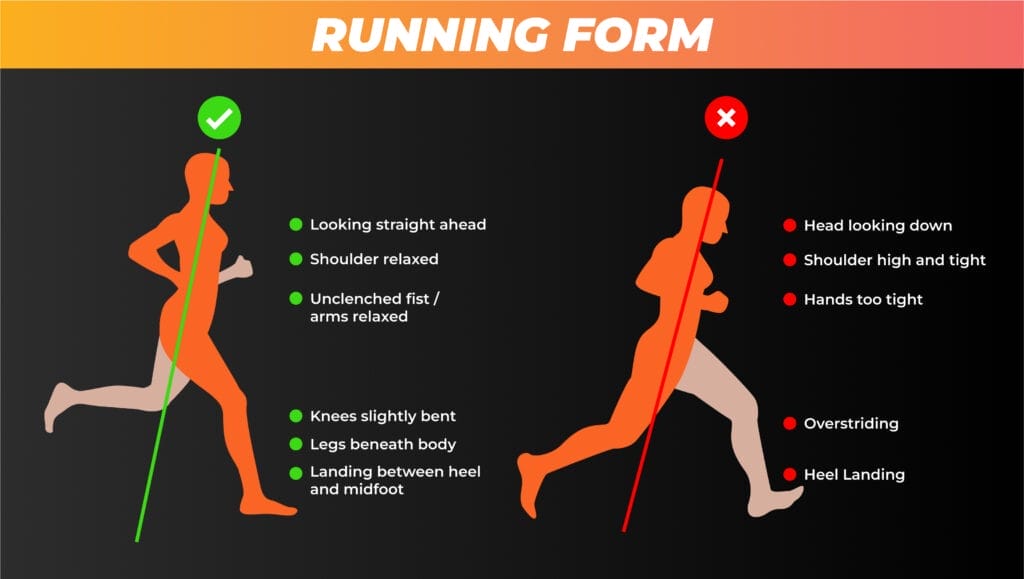
Look ahead naturally rather than constantly looking down at your feet. Your eyes can focus on the path several meters in front of you.
Try not to push your chin toward your chest or tilt your head too far backward. A relaxed, neutral head position can help your neck and shoulders stay comfortable during a run.
If you run on trails or uneven surfaces, you can briefly look down when necessary. Simply return to a natural forward-looking position afterward.
2. Relax Your Shoulders
Tension in the shoulders is common, especially when beginners become tired.
Try to keep your shoulders relaxed and away from your ears. Avoid deliberately pulling them backward or holding them rigidly.
Every few minutes, check your upper body. If you notice your shoulders creeping upward, gently shake out your arms and relax them.
A relaxed upper body can make running feel more comfortable and reduce unnecessary tension.
3. Use a Natural Arm Swing
Your arms help balance your body as you run.
Keep your elbows comfortably bent and allow your arms to swing naturally backward and forward. Your hands should remain relaxed rather than tightly clenched.
Your arms generally move opposite to your legs. As one leg moves forward, the opposite arm moves forward as well.
Avoid swinging your arms aggressively across your body. A relaxed forward-and-back motion is usually more efficient and comfortable.
4. Maintain Good Running Posture
Your posture can change as you become tired.
Aim for a tall, relaxed posture rather than sitting back or collapsing forward. Your body can have a slight forward lean from the ankles when running, particularly as speed increases, but you do not need to bend dramatically at the waist.
Imagine that your head, shoulders, and hips are generally aligned.
Good posture should feel natural. If maintaining a particular position requires constant muscular effort, you may be overthinking the technique.
5. Avoid Overstriding
Overstriding happens when your foot lands too far in front of your body.
A long stride may look fast, but reaching excessively forward can increase braking forces and make running feel less efficient.
Instead of trying to make each stride longer, allow your feet to land relatively close to your body’s center of mass.
One useful cue is to think about taking light, comfortable steps rather than reaching forward with your legs.
6. Find a Comfortable Cadence
Cadence refers to the number of steps you take per minute.
You may have heard that every runner should aim for a specific cadence, but there is no single number that works perfectly for everyone.
Cadence naturally changes with running speed, height, fitness, and individual biomechanics.
If your stride feels overly long or you are consistently landing far ahead of your body, slightly increasing your step rate may help you find a more comfortable rhythm.
Make changes gradually rather than suddenly trying to double your step rate.
7. Think About Your Foot Strike
Foot strike describes how your foot contacts the ground while running. Common descriptions include heel striking, midfoot striking, and forefoot striking.
There is no universal rule saying that every runner must land on a particular part of the foot.
Trying to force a completely different foot strike can actually make running feel awkward and may place unfamiliar stress on your muscles and joints.
Instead, focus on avoiding excessive reaching with your foot and maintaining a comfortable, natural stride.
8. Keep Your Hands Relaxed
It is easy to forget about your hands while thinking about running form.
Avoid making tight fists. Imagine that you are gently holding something fragile in each hand.
Relaxed hands can help reduce unnecessary tension through your forearms, shoulders, and upper body.
During longer runs, periodically check your hands and shoulders. If they feel tense, loosen them and return to a relaxed position.
9. Let Your Stride Change Naturally
Your running form does not need to look identical at every speed.
When you walk, jog, run quickly, climb a hill, or descend a slope, your movement naturally changes.
For example, your stride may become shorter when running uphill. On a faster run, your cadence and arm movement may increase.
Rather than trying to maintain exactly the same technique throughout every workout, focus on staying controlled and relaxed.
10. Improve Running Form Gradually
Changing your running technique should be a gradual process.
If you suddenly change your stride, cadence, posture, and foot strike all at once, your body may need to handle stresses it is not accustomed to.
Choose one simple focus for a few runs. For example, you might concentrate on relaxing your shoulders or avoiding excessive overstriding.
Once that adjustment feels natural, you can focus on another aspect of your running form.
Common Running Form Mistakes
Beginners often make a few common technique mistakes:
-
Looking down constantly
-
Holding the shoulders too high
-
Clenching the hands
-
Taking excessively long strides
-
Swinging the arms across the body
-
Running with unnecessary upper-body tension
-
Trying to copy another runner’s exact technique
-
Changing several aspects of form too quickly
The solution is not to become obsessed with perfect technique. Running should still feel natural and enjoyable.
Can Better Running Form Prevent Injuries?
Good running mechanics may help you run efficiently and manage repetitive stress, but there is no running technique that can guarantee injury prevention.
Training load, recovery, footwear, strength, sleep, previous injuries, running surface, and many other factors can influence injury risk.
If you experience persistent pain, especially pain that changes your running pattern, reduce or stop the activity and consider consulting a qualified healthcare professional.
Final Thoughts
Learning good running form is less about creating a perfect-looking stride and more about becoming a relaxed, efficient runner.
Keep your head neutral, relax your shoulders and hands, maintain a comfortable posture, and avoid reaching too far forward with each step. Let your cadence and stride change naturally as your speed changes.
Most importantly, do not try to rebuild your entire running technique overnight. Make small adjustments, give your body time to adapt, and pay attention to how you feel.
With regular practice, these simple running form tips can help make your runs feel smoother, more comfortable, and more controlled.